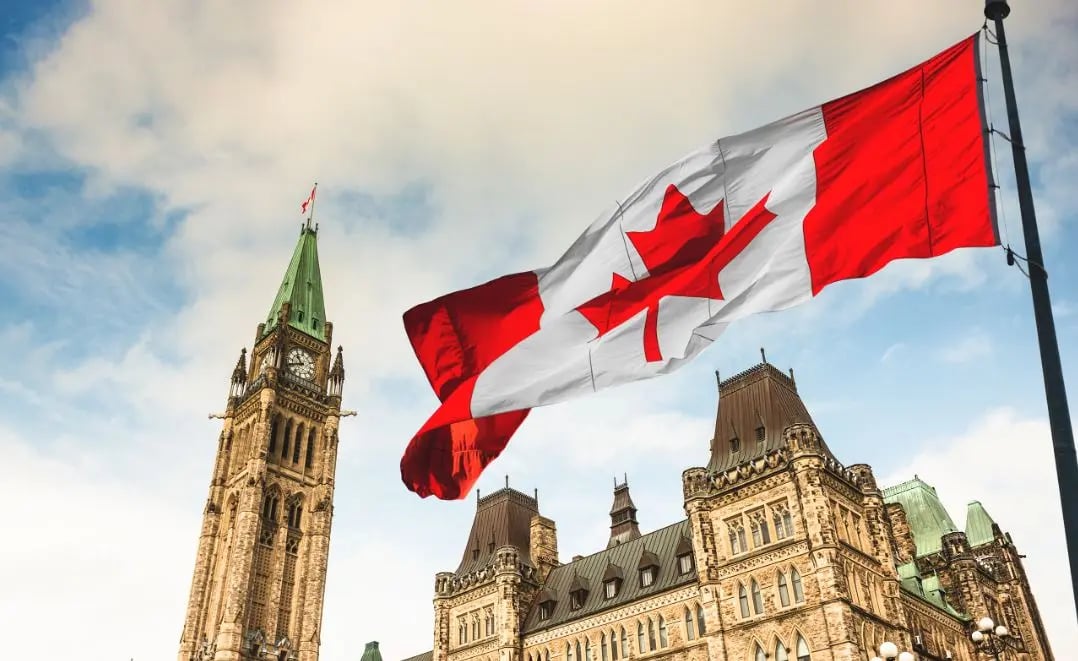
What the Bank of Canada’s October Decision and Monetary Policy Report Mean for Oakville Real Estate
Buying & Selling Petrus Engelbrecht & Joshua Engelbrecht October 28, 2026
Buying & Selling Petrus Engelbrecht & Joshua Engelbrecht October 28, 2026
The first rate increase in three years changes the arithmetic at the margin. It does not change what decides price in Old Oakville, Morrison, and Ford.
Petrus Engelbrecht & Joshua Engelbrecht | Engelbrecht Associates, Sotheby’s International Realty Canada | Southeast Oakville Specialists
Petrus Engelbrecht and Joshua Engelbrecht of Engelbrecht Associates, Sotheby’s International Realty Canada, specialize in luxury residential real estate across Southeast Oakville, covering Old Oakville, Morrison, and Ford. On Wednesday 28 October 2026 the Bank of Canada raised its policy rate by a quarter point to 2.5 per cent, its first increase since July 2023. The headline will read as a turn, and it is one. But in Southeast Oakville the market had already turned on price, and this decision mostly removes the last good reason to wait for cheaper money.
The hike nudges the numbers for financed buyers, most of all in Ford. It does not change what has decided outcomes here all autumn: whether a home is priced where buyers actually transact.
The October rate increase did not change what decides price in Southeast Oakville. It removed the case for waiting for rates to fall.
The Bank increased its target for the overnight rate by 25 basis points to 2.5 per cent, with the Bank Rate at 2.75 per cent and the deposit rate at 2.45 per cent. It ends a run of seven consecutive holds at 2.25 per cent that began with the reduction of 29 October 2025, the run we described in What the Bank of Canada’s September Decision Means for Oakville and Southeast Oakville Buyers.
Most economists had expected the increase. It came with the quarterly Monetary Policy Report, and the forecast in that report is the more important document this time.
The policy rate is the Bank of Canada target for the overnight rate. It feeds directly into the prime rate, which governs variable-rate mortgages and home equity lines of credit. The next scheduled announcement is Wednesday 9 December 2026.
One reason above all: energy prices have stayed high for longer than the Bank expected, and it is no longer willing to assume they will stay contained. The conflict in the Middle East is in its eighth month, oil prices and refinery margins remain elevated, and CPI inflation has been running around 3 per cent since April. The Bank now expects it to reach about 3.5 per cent by the end of the year.
What changed is the forecast for 2027. The Bank now expects CPI inflation to average 3 per cent next year, a full percentage point above its July projection, before returning to the 2 per cent target around the middle of 2028. Its concern is pass-through. Higher fuel costs are raising what it costs businesses to produce and move goods, imported input prices have risen, and the Bank’s own surveys suggest businesses will pass more of those costs on over the coming year.
The Bank was candid that this was a close call. Governing Council weighed holding against hiking. The case for holding was that inflation excluding gasoline was still 2.2 per cent in September, core measures remain close to 2 per cent, slack remains in the economy, and new United States tariffs are expected to slow growth in the fourth quarter. Hiking won because growth has been firmer than expected, 3.3 per cent in the second quarter and about 2 per cent in the third.
The Bank of Canada raised rates in October 2026 to stop high energy prices becoming general inflation, not because the economy was overheating.
Possibly, and the Bank said so. Its statement allowed that the policy rate may need to rise further, while stressing that, given the uncertainty, it will proceed carefully and take decisions one meeting at a time. It named the Middle East and business pricing behaviour as the main uncertainties.
Read plainly, that is a bias toward tightening with no fixed path. The useful conclusion is narrower than any forecast: planning around rates falling is over for now.
It reaches different borrowers at different speeds. Variable-rate mortgages and lines of credit move with prime, and the major banks have historically adjusted prime by the full amount of a Bank of Canada move within a day or two. Prime stood at 4.45 per cent going into the announcement. Confirm the new figure with your lender rather than assuming it.
Fixed-rate mortgages are priced off Government of Canada bond yields, which trade on expectations rather than on the announcement itself. Those yields were already higher than in July, so fixed rates had largely moved before today.
There is one consequence buyers tend to miss. The federal stress test for uninsured mortgages qualifies a borrower at the greater of the contract rate plus two percentage points or 5.25 per cent. At today’s contract rates the first figure is usually the higher one, so a rise in the rate a buyer is offered raises the rate they must qualify at by the same amount. We covered how lenders assess high-value purchases in How Appraisals and Financing Work on High-Value Homes, and the advice there to arrange financing before an offer becomes firm matters more this week than it did last week.
A quarter-point rise in the contract rate is also a quarter-point rise in the stress-test rate for most uninsured borrowers.
Not directly, and the reason is structural. The policy rate in Southeast Oakville is a sentiment variable more than a financing variable, because a large share of purchases here are funded by equity rather than by the maximum a lender will advance. Much of that equity comes from the sale of a long-held home, the mechanism we set out in Downsizing in Southeast Oakville. For those buyers a quarter point changes the carrying cost a little and the decision hardly at all.
What the hike does do is reinforce a market that was already negotiating. Our Q3 2026 data for Southeast Oakville showed detached sales down about a quarter on the year while median days on market held steady: fewer sales, same speed. The September 2026 market data showed homes that priced correctly selling quickly, and none selling at or above asking. Price, not financing, was already the deciding factor in Oakville real estate before this decision was made.
Supply is the other half. Our October listings snapshot found new listings arriving where buyers transact, while the older, longer-listed stock sits higher up the price range, with roughly eight months of supply at the third-quarter sales pace. A rate increase does not create buyers for a home priced above its market. It makes the gap more visible.
A rate increase does not set prices in Southeast Oakville. It makes the gap between asking and value easier to see.
For a buyer, three practical points. First, plan on today’s rates, not lower ones. The Bank has signalled that further increases are possible, so a strategy built on waiting is now a bet against the Bank’s own stated bias.
Second, get the financing work done early. Have your broker re-run your approval at the new rates, price fixed and variable side by side, and confirm how your lender will approach the appraisal.
Third, use the conditions in front of you. With supply above the recent pace of sales and sellers in the upper price bands still adjusting, a well-prepared buyer has room to negotiate on price and terms. That leverage is worth more than the quarter point the Bank just added.
For a seller, the decision closes off the hope that cheaper money will arrive and lift demand before spring. It may not. The sellers succeeding this autumn are the ones who priced to where sales are happening, prepared the home properly, and put it in front of the right buyer. That holds at 2.5 per cent too.
If your home has sat without the activity you expected, the rate decision is not the explanation and will not be the fix. Across Oakville real estate this autumn, price has been the lever.
Sellers who wait for rates to rescue a listing are waiting on the one variable the Bank of Canada has just told them is moving the other way.
The three neighbourhoods absorb a rate change differently, and the order has not changed since September.
Old Oakville is the least rate-sensitive. Supply is capped by a nineteenth-century survey and a heritage conservation district, and buyers are frequently equity-heavy.
Morrison sits in between. Its deeper lots draw families trading up, downsizers, and builders, and where a purchase involves a rebuild, construction financing costs move with rates too.
Ford is where this decision will be felt most. It is the accessible entry point into Southeast Oakville, with a younger housing stock on smaller lots, and a larger share of its buyers are making a genuine borrowing decision against the stress test. Ford also widened most on sale-to-list in the third quarter. Expect buyers there to be the most price-disciplined through the winter.
A rate increase is felt most where buyers are most financed, which within Southeast Oakville means Ford first, Morrison second, and Old Oakville least of all.
On 28 October 2026 the Bank of Canada raised its target for the overnight rate by 25 basis points to 2.5 per cent, with the Bank Rate at 2.75 per cent and the deposit rate at 2.45 per cent. It was the first increase since July 2023.
The Bank of Canada raised rates to reduce the risk that persistently high oil and fuel prices spread to the prices of other goods and services. It revised its inflation forecast higher, expecting CPI inflation to average 3 per cent in 2027 before returning to 2 per cent around the middle of 2028.
The Bank of Canada said there could be a need to raise the policy rate further but that it will proceed carefully and decide one meeting at a time. The next scheduled announcement is Wednesday 9 December 2026.
Not directly. Many purchases in Southeast Oakville are funded substantially by equity, so borrowing costs are one input rather than the deciding factor. In autumn 2026, pricing relative to recent sales was already the main driver of outcomes in Old Oakville, Morrison, and Ford.
Ford is the most rate-sensitive of the three because it is the accessible entry point into Southeast Oakville and a larger share of its buyers rely on mortgage financing. Morrison sits in between, and Old Oakville is the least affected because supply is capped and buyers are frequently equity-heavy.
After the October 2026 decision the Bank of Canada signalled that further increases are possible, so waiting for lower rates is a bet against its stated direction. Buyers are generally better served by arranging financing early and negotiating on price, and should seek advice from a qualified mortgage professional on their own situation.
Petrus Engelbrecht
Joshua Engelbrecht
Engelbrecht Associates
Sotheby’s International Realty Canada
Oakville, Ontario
Southeast Oakville Specialists
Sources: Bank of Canada interest rate announcement and Monetary Policy Report of 28 October 2026, and the Governor’s opening statement of the same date; Office of the Superintendent of Financial Institutions (minimum qualifying rate for uninsured mortgages); Reuters economist poll of 21 to 23 October 2026. Southeast Oakville market observations refer to Engelbrecht Associates posts drawing on PropTx aggregate data, as set out in their own methodology notes.
This post is general market commentary. It is not financial, mortgage, legal, or tax advice, and it is not advice on any particular property or transaction. Interest rates, lender policies, and qualifying rules change; consult a qualified mortgage professional or financial advisor about your own circumstances. No individual property, transaction, or party is identified.
Stay up to date on the latest real estate trends.

Buying & Selling
A Guide to Probate, Executor Responsibilities, Property Valuation, and Selling an Inherited Home in Old Oakville, Morrison, and Ford

Buying & Selling
A Monthly Review of Detached Home Sales, Pricing, Negotiation, and Inventory Across Old Oakville, Morrison, and Ford
Buying & Selling
How the October 2026 Interest Rate Increase Affects Mortgages, Buyer Confidence, and Property Values Across Old Oakville, Morrison, and Ford

Buying & Selling
Understanding Mortgage Appraisals, Financing Requirements, and Lending Risks for Luxury Homes in Old Oakville, Morrison, and Ford
Buying & Selling
Understanding MPAC Assessments, 2026 Property Tax Rates, and How Renovations and Rebuilds Affect Homeowners in Old Oakville, Morrison, and Ford
Buying & Selling
An October 2026 Snapshot of Inventory, New Listing Prices, and Buyer Demand Across Old Oakville, Morrison, and Ford

Buying & Selling
A Buyer's Guide to Pool Inspections, Ravine Restrictions, Tree Protection, and Property Due Diligence in Old Oakville, Morrison, and Ford
Buying & Selling
A Quarterly Review of Detached Home Sales, Pricing, Negotiation, and Days on Market Across Old Oakville, Morrison, and Ford
Buying & Selling
Understanding Residual Land Value, Rebuild Costs, Zoning Restrictions, and Tear-Down Opportunities Across Old Oakville, Morrison, and Ford
With our extensive network, we can assist regardless of where your property journey takes you. It’s about knowing who you are, what you love, and how to make your property journey one that will leave a lasting memory. It’s as simple as that. Contact us today!