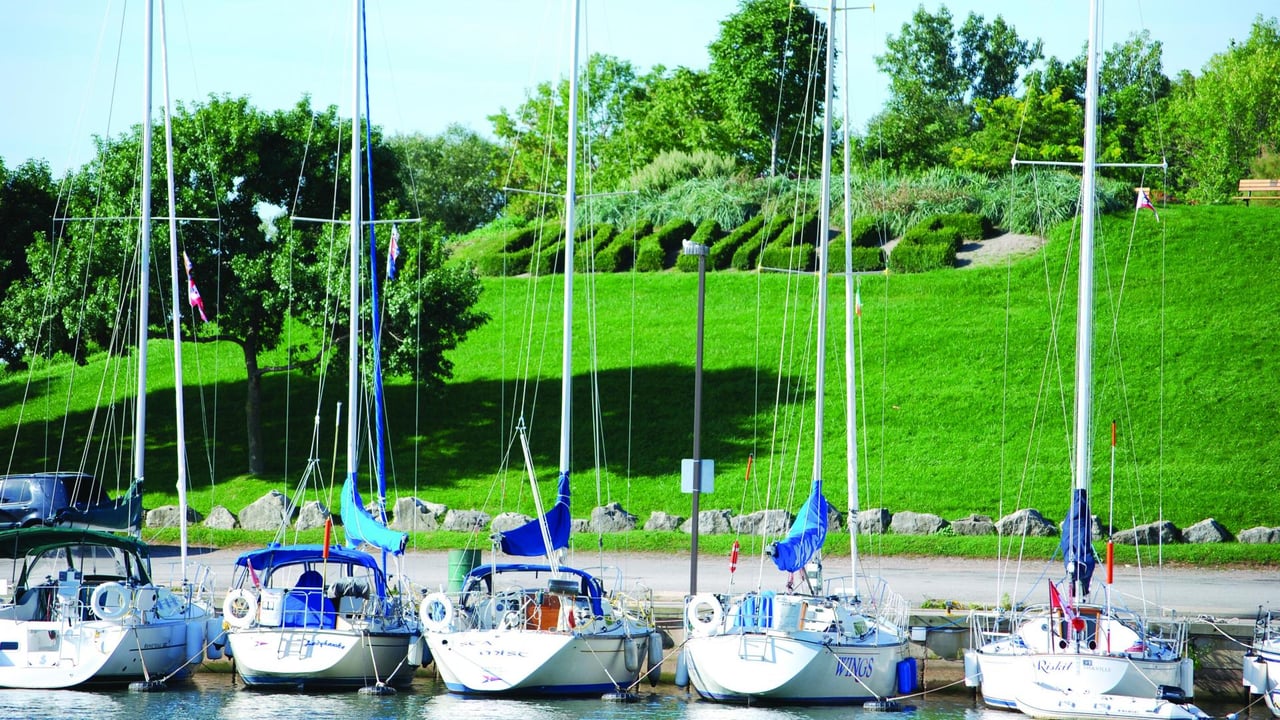
The History of Old Oakville: How Two Centuries Built Canada’s Most Coveted Address
Southeast Oakville Petrus Engelbrecht & Joshua Engelbrecht August 25, 2026
Southeast Oakville Petrus Engelbrecht & Joshua Engelbrecht August 25, 2026
Why a private harbour, a timber trade, and a heritage by-law explain more about Old Oakville property values than any market report
Petrus Engelbrecht & Joshua Engelbrecht | Engelbrecht Associates, Sotheby’s International Realty Canada | Southeast Oakville Specialists
Petrus Engelbrecht and Joshua Engelbrecht of Engelbrecht Associates, Sotheby’s International Realty Canada, specialize in luxury residential real estate across Southeast Oakville, covering Old Oakville, Morrison, and Ford. Most neighbourhood histories are decoration, a pleasant paragraph near the top of a listing that nobody reads twice. Old Oakville’s is not. It is the direct cause of how this market behaves today, and it explains the question buyers ask us most often, which is why so little ever comes available.
One man bought a fixed quantity of land at the mouth of a creek in 1827 and laid a town out on it. Almost every constraint that makes Old Oakville expensive now, the compact lots near the harbour, the narrow streets, the protected streetscape, the walkable core, was set in place before Confederation.
Old Oakville is scarce because the ground it sits on was surveyed and spoken for nearly two centuries ago. No amount of demand manufactures more of it.
The land came into Crown hands in 1820, ceded by the Mississaugas of the Credit. In 1827 roughly nine hundred and sixty acres at the mouth of Sixteen Mile Creek were sold at auction to William Chisholm, a merchant and militia colonel. He handed much of the practical development to his son, Robert Kerr Chisholm, and his brother-in-law, Merrick Thomas, and the town was laid out through the early 1830s.
What makes this unusual is not that a town was founded, but who founded it. Almost every other harbour on Lake Ontario was developed by the Crown or a public authority.
Old Oakville is the only privately developed port on Lake Ontario, and that single fact shaped everything that came afterward.
Chisholm was selling lots, so he placed the harbour, the streets, and the commercial frontage to make those lots worth buying. The result is a downtown core that still works at walking pace, oriented toward the water, which is precisely what buyers pay a premium for two centuries later.
The harbour turned a creek mouth into an export business. Shipbuilding ran along Navy Street and Sixteen Mile Creek, and schooners carried out the two commodities the countryside produced in volume: white oak timber, much of it cut into barrel staves, and wheat.
The oak matters more than it sounds. The town’s name traces to the oak forests that supplied that stave trade, so the species that made the place prosperous is the one that gives Southeast Oakville its canopy today. By 1846 the population had reached roughly fifteen hundred, with three churches, mills, and manufacturers. By 1869 it was around two thousand.
The tree canopy buyers admire on these streets is not landscaping. It is the remnant of the industry that built the town.
It ended, and the town survived it. A recession through the 1850s closed the foundry, Oakville’s most important industry. The Grand Trunk Railway shifted freight off the water and undercut the harbour’s reason for existing. Basket-making became a major local industry, and fruit growing followed as the surrounding land turned to orchards and market gardens.
Then that ended too, and the town survived that as well, absorbed into the postwar Greater Toronto Area as a residential address rather than a working port.
A town that has outlived the collapse of its founding industry twice has proven something no single market cycle can undo.
This is the part that matters to anyone evaluating Oakville real estate as a long-term hold. Each time, the underlying asset, a small quantity of well-located land beside a lake within reach of a major city, held its value and found a new use. We made the broader argument in Old Oakville: Why This Address Behaves Unlike Any Other Market in Canada, and the historical record supports it more strongly than the market data alone does.
It is a substantial part of the town’s story, and Oakville was a destination on the Underground Railroad, with freedom seekers arriving in numbers particularly between 1850 and 1865, after the United States Fugitive Slave Act made the northern states unsafe.
The central figure is James Wesley Hill. Born into slavery in Maryland, he escaped, settled on a farm near Maple Grove, then went back repeatedly to bring others out. He is credited with helping hundreds of people reach freedom, is remembered in Maryland to this day as Canada Jim, and gave many of those who arrived their first work on his own land.
He was not alone. Captain Robert Wilson carried people across the lake concealed in the grain holds of his ships. A Black community established itself, built the African Methodist Church at the end of the 1880s, and marked Emancipation Day at St. George’s Square.
The public school carrying James Wesley Hill’s name sits inside the catchment that draws families to Southeast Oakville today. That is not a coincidence. It is the town acknowledging who built it.
We set out how the catchments actually work in School Catchments in Southeast Oakville: What Buyers Get Wrong Before They Choose a Street.
Erchless is the Chisholm family home on Navy Street, largely built by Robert Kerr Chisholm and named after the Chisholm clan seat in Inverness-shire. The family lived there across six generations, close to the entire life of the town. It is now the Oakville Museum, and the best place to understand why the streets around it are laid out as they are.
This is the part with direct consequences for owners. The Old Oakville Heritage Conservation District was designated under Part V of the Ontario Heritage Act in the early 1980s. It covers roughly one hundred and sixty properties, predominantly one and two storey nineteenth-century residences, bounded by Lake Ontario, Sixteen Mile Creek, Robinson Street, and Allan Street.
The architecture inside it is mixed. Neoclassical, Georgian, Gothic Revival, and Italianate all appear, and workers’ cottages sit alongside merchants’ townhouses on the same streets. That mingling is itself the heritage value, a legible record of how wealth was distributed in a nineteenth-century port.
The district is live legislation, not a plaque. The Town amended the designating by-law as recently as March 2025, under By-law 2025-054, to bring additional designated properties inside the boundary.
A heritage conservation district does not freeze a neighbourhood. It governs what may change on the exterior, and that is exactly why the streetscape still looks the way it does.
Directly, and measurably. Old Oakville’s supply is capped by a survey drawn in the 1830s and a conservation district drawn in the 1980s. Neither will expand. When demand rises, the only available response is price, because it cannot be new inventory.
That is what separates Old Oakville from the two neighbourhoods beside it, and why we treat Southeast Oakville as three markets rather than one. Morrison was developed largely through the middle of the twentieth century, on the deeper lots between Lake Ontario, the QEW, Chartwell Road, and Maple Grove Drive. Ford was built out primarily between the 1960s and the 1980s, on smaller lots with a younger housing stock, and remains the accessible way into the area. Each has its own buyer, and we have written about Morrison and Ford individually for that reason.
The lake proximity Chisholm built the town around is still the strongest single value layer here, which we examined in Old Oakville Waterfront and Near-Lake Living. The seasonal transaction data bears the scarcity argument out in ordinary market terms, as our Southeast Oakville Spring 2026 Recap set out.
The buyers acting on this come, in order of volume, from the Greater Toronto Area, from elsewhere in Canada, and from abroad. They are rarely buying a house. They are buying a position inside a boundary fixed a long time ago.
If you are buying, you are competing for a fixed pool, and the heritage district is an asset rather than an obstacle. It is the reason the street will look the same in twenty years. Budget for the permit process, ask early what is designated, and treat the constraint as part of what you are buying.
If you are selling, the history is not a nice detail. It is your pricing argument. A home inside the conservation district is protected against the thing that erodes value in most neighbourhoods, the arrival of something out of scale next door. That protection is worth naming explicitly, and most listings never bother.
Two centuries of history are not why Old Oakville is charming. They are why it is scarce, and scarcity is what the price reflects.
For the broader picture of how the three neighbourhoods fit together, and how Oakville real estate behaves across them, our Definitive Guide to Southeast Oakville Real Estate remains the best place to start.
The land was ceded by the Mississaugas of the Credit in 1820 and sold at Crown auction in 1827 to William Chisholm, who acquired roughly nine hundred and sixty acres at the mouth of Sixteen Mile Creek. The town was laid out through the early 1830s.
The name is generally traced to the oak forests of the surrounding area, which supplied the white oak timber and barrel stave trade the harbour exported through the nineteenth century.
It is an area designated under Part V of the Ontario Heritage Act in the early 1980s, covering roughly one hundred and sixty predominantly nineteenth-century residences bounded by Lake Ontario, Sixteen Mile Creek, Robinson Street, and Allan Street. It governs exterior alterations and demolition. Confirm current requirements with the Town of Oakville.
In our experience it does not. The designation controls exterior change across the surrounding streets as well, protecting an owner against out-of-scale development next door. That protection is a durable value argument, and it is often under-used in marketing.
Yes. Exterior alterations visible from the street generally require a heritage permit and demolition is tightly controlled, but interior work is generally outside the scope of the district. Many homes there are period outside and fully modern inside.
Oakville was a destination for freedom seekers, particularly between 1850 and 1865. James Wesley Hill, who had escaped slavery in Maryland, settled near Maple Grove and returned repeatedly to guide others to Canada. A Black community established itself, built the African Methodist Church at the end of the 1880s, and marked Emancipation Day at St. George’s Square.
Old Oakville is the nineteenth-century town core, with heritage architecture, a walkable downtown, and Lake Ontario access. Morrison was developed largely through the middle of the twentieth century on deeper lots. Ford was built out primarily between the 1960s and the 1980s on smaller lots with a younger housing stock.
Petrus Engelbrecht
Joshua Engelbrecht
Engelbrecht Associates
Sotheby’s International Realty Canada
Oakville, Ontario
Southeast Oakville Specialists
Sources: Town of Oakville, Oakville Historical Society, Canadian Register of Historic Places, and the Ontario Heritage Act. Heritage designation status and permit requirements change over time; confirm current requirements for any specific property directly with the Town of Oakville.
This post is general market commentary and historical background. It is not advice on any particular property or transaction. No individual property, transaction, or party is identified.
Stay up to date on the latest real estate trends.
Buying & Selling
How Photography, Natural Light, Seasonal Colour, and Launch Timing Shape a Southeast Oakville Fall Listing
South East Oakville
What Three Months of Sales, Inventory, Pricing, and Negotiation Reveal Across Old Oakville, Morrison, and Ford
Buying & Selling
A Family Guide to Oakville’s Independent Schools, Their Locations, and What School Proximity Means When Choosing a Home
Buying & Selling
A September Snapshot of Inventory, Price Bands, and Days on Market Across Old Oakville, Morrison, and Ford
South East Oakville
https://chatgpt.com/c/6a96cdbe-dbd8-83ea-9dab-d4eb92a462d3
South East Oakville
What August Sales, Inventory, Asking Prices, and Days on Market Reveal About Southeast Oakville Going Into Autumn
Southeast Oakville
What the September Rate Hold Means for Buyers, Sellers, and Pricing Across Old Oakville, Morrison, and Ford
Buying & Selling
A Guide to Unlocking Equity, Finding the Right Smaller Home, and Staying in the Neighbourhood You Know
Buying & Selling
What Mid-August Inventory, Pricing and Days on Market Reveal About Southeast Oakville’s Fall Market
With our extensive network, we can assist regardless of where your property journey takes you. It’s about knowing who you are, what you love, and how to make your property journey one that will leave a lasting memory. It’s as simple as that. Contact us today!